Skill Substitution, Expectations, and the Business Cycle
Abstract
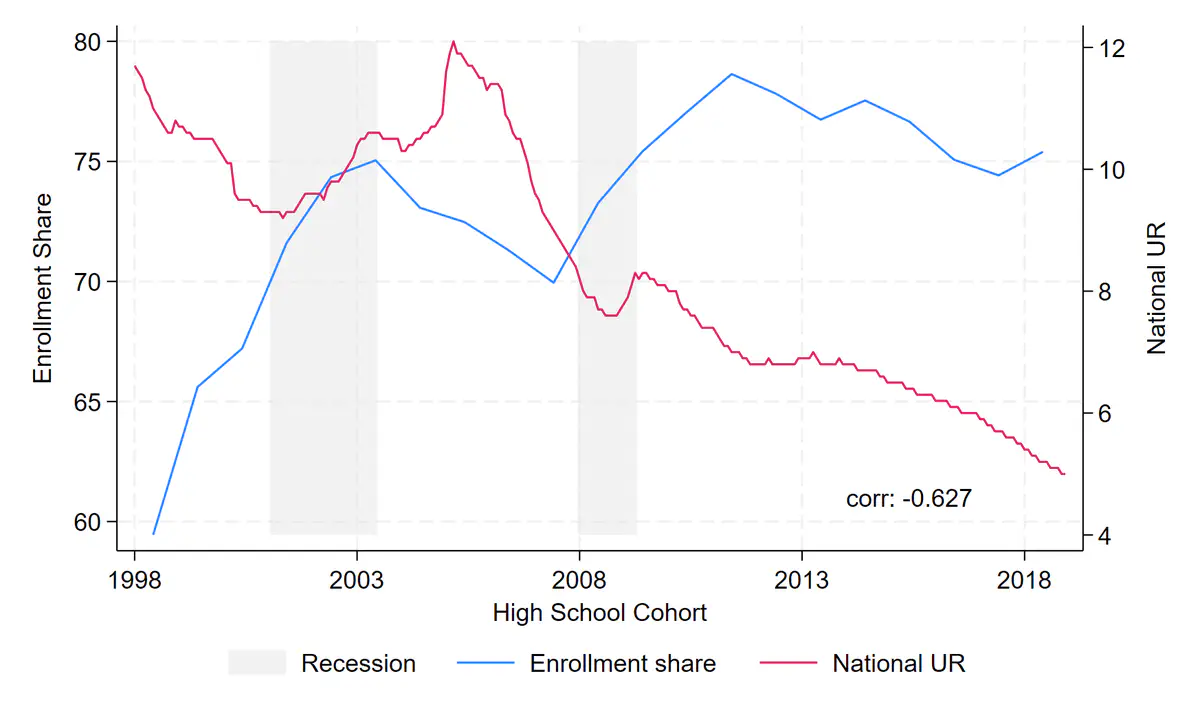
This paper studies how labor market conditions around high school graduation affect postsecondary skill investments. Using administrative data on more than six million German graduates from 1995-2018, and exploiting deviations from secular state-specific trends, I document procyclical college enrollment. Cyclical increases in unemployment reduce enrollment at traditional universities and shift graduates toward vocational colleges and apprenticeships. These effects translate into educational attainment. Using large-scale survey data, I identify changes in expected returns to different degrees as the main mechanism. During recessions, graduates expect lower returns to an academic degree, while expected returns to a vocational degree are stable.

Andreas Leibing
Postdoctoral Researcher
I’m an applied microeconomist with a particular interest in labor economics and the economics of education.